• GX-K2 refrigerant warning device
  • GX-K2 refrigerant warning device
  • GX-K2 refrigerant warning device
  • GX-K2 refrigerant warning device
  • GX-K2 refrigerant warning device
  • GX-K2 refrigerant warning device

GX-K2 refrigerant warning device

GX-K2 refrigerant warning device

Normal price 139,00 €
Normal price Selling price 139,00 €
Sale Sold out
including VAT plus Versandkosten
  • Kältemittelwarnmelder für Wärmepumpen und private Klimaanlagen
  • Überwachung von giftigen Kältemitteln wie z.B. R-22, R-32, R-404a, R-410a, R-1234yf und viele weitere fluorierte Kältemittel (FKW)
  • Querempfindlichkeit zu Methan, Butan, Propan (R-290), Ethanol, Wasserstoff uvm.
  • Frühzeitige Warnung vor gesundheitsgefährdenden Leckagen in Kältemittelanlagen
  • 230 V Steckdosengerät – keine Montage erforderlich, sofort einsatzbereit
  • optische Warnmeldung durch LED, akustische Warnmeldungen durch lauten Piezo-Summer
  • externer Sensor kann optimal platziert werden, ist nach 3 Minuten Aufwärmzeit betriebsbereit, Sensorlebensdauer bis ca. 5 Jahre, externer Sensor kann vom Nutzer selbst getauscht werden
  • Unterstützt den Schutz von Mensch und Umwelt durch frühzeitige Leckerkennung
  • Discounts for specialist companies & resellers
  • Personal expert advice (no call center!)
  • Repair service beyond the statutory warranty

Item number: 300932

Delivery time: 2-3 working days

View full details
GX-K2 refrigerant warning device

GX-K2 refrigerant warning device

139,00 €
  • Description
  • Technical information
  • Downloads
  • Reviews

HFC Alarm GX-K2 – Early warning system for escaping refrigerants

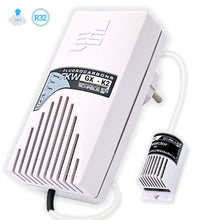
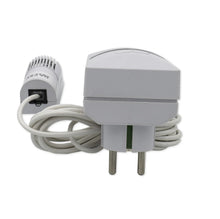
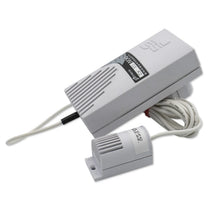
Many refrigerants are not only highly harmful to the climate, but also toxic or flammable. Even if a leak in the cooling system quickly leads to a failure of the cooling function, the invisible danger posed by evaporating gases remains – because these should never be inhaled. This is precisely where the GX-K2 warning device with external sensor comes in: the external sensor can be optimally positioned without additional structural measures, detects leaking refrigerant early, and provides a clear warning long before a health-threatening concentration is reached.

The device is specially designed for health protection and is configured for exceptional sensitivity. The sensor detects a wide range of common refrigerants, including R-32 as the target gas, as well as R-290 (propane), R-22, R-404a, R-410a, R-1234yf, and many other fluorinated hydrocarbons (HFCs). Thanks to their high cross-sensitivity, the sensors also react to related gases such as methane, butane, ethanol, or hydrogen. A simple functional test is possible at any time using reduced-pressure gas from a lighter—a practical advantage, since R-290, for example, is identical to commercially available propane.

After plugging it into the power outlet and a short preheating period of approximately three minutes, the device is ready for use. If the system detects leaking refrigerant, it warns with a clearly audible signal and a flashing red LED – timely, reliable, and unmistakable.

The HFC alarm is ideal for residential or commercial applications where an explosion-proof environment isn't required. Whether heat pumps, air conditioners, or refrigeration units – with the GX-K2, you not only protect your technology, but above all, the health of the people around you.

What are HFC refrigerants?
A refrigerant is a fluid used in refrigeration systems for heat transfer. It absorbs heat at low pressure and temperature and releases it again at higher pressure and temperature. The refrigerant's physical state changes from liquid to gas and vice versa. Fluorinated greenhouse gases have fluorine in common. Typical examples are fluorinated hydrocarbons such as tetrafluoromethane (CF4), partially fluorinated hydrocarbons such as trifluoromethane (CHF3), and sulfur hexafluoride (SF6).
Fluorocarbons (PFCs, HFCs) are considered climate-damaging substances. They are divided into fully halogenated (PFCs) and partially halogenated fluorocarbons (HFCs). PFCS are hydrocarbons whose hydrogen atoms are fully replaced by fluorine atoms. HFCs are hydrocarbons whose hydrogen atoms are partially replaced by fluorine atoms. They have very different GWP values/CO2 equivalents and contribute to the warming of the Earth's atmosphere, i.e., to the so-called greenhouse effect.

Heat pumps need a coolant
The terms "refrigerant" and "coolant" are often used synonymously. However, this is technically incorrect. The difference between a refrigerant and a coolant is that a refrigerant can remove heat even when the ambient temperature is higher than the temperature of the object being cooled. A coolant, on the other hand, can only remove heat from an object when the ambient temperature is colder. For example, the coolant heated by a car's engine releases heat into the cooler environment.
To achieve temperatures below ambient temperature, a refrigerant is required in industrial applications, refrigerators, freezers, and air conditioning systems. This is also true for the increasingly popular heat pumps. The temperature inside should always be lower than outside.
A heat pump therefore works in reverse. It extracts heat from the environment and transfers it to the building or heating system. Depending on the type of heat pump, the refrigerant circuit can be installed separately or integrated into the unit.

WEEE NO.: DE91394868

Operating voltage 230V AC/50-60Hz
Functional area -10°C/+50°C
Protection class IP67
Dimensions(WxWxD)

118x60x44 mm, sensor 52x27x29 mm

Power consumption approx. 3 VA
Alarm optically
Advertisement 3 LEDs
Type of gas Butane, CFC R32, ethanol, fluorocarbon, methane-CH4, propane, hydrogen H2
Line 2.5m | 2×0.14mm2 | white, extendable
Humidity 10% – 90% rH, non-condensing
Trigger concentration 100-10,000 ppm, depending on the refrigerant, z.BR-32 from 1000 ppm, 12% LEL
Sound pressure level 90 dB (10 cm distance)
Temperature -20°C/+70°C storage temperature

Customer Reviews

Be the first to write a review
0%
(0)
0%
(0)
0%
(0)
0%
(0)
0%
(0)
Description

HFC Alarm GX-K2 – Early warning system for escaping refrigerants

Many refrigerants are not only highly harmful to the climate, but also toxic or flammable. Even if a leak in the cooling system quickly leads to a failure of the cooling function, the invisible danger posed by evaporating gases remains – because these should never be inhaled. This is precisely where the GX-K2 warning device with external sensor comes in: the external sensor can be optimally positioned without additional structural measures, detects leaking refrigerant early, and provides a clear warning long before a health-threatening concentration is reached.

The device is specially designed for health protection and is configured for exceptional sensitivity. The sensor detects a wide range of common refrigerants, including R-32 as the target gas, as well as R-290 (propane), R-22, R-404a, R-410a, R-1234yf, and many other fluorinated hydrocarbons (HFCs). Thanks to their high cross-sensitivity, the sensors also react to related gases such as methane, butane, ethanol, or hydrogen. A simple functional test is possible at any time using reduced-pressure gas from a lighter—a practical advantage, since R-290, for example, is identical to commercially available propane.

After plugging it into the power outlet and a short preheating period of approximately three minutes, the device is ready for use. If the system detects leaking refrigerant, it warns with a clearly audible signal and a flashing red LED – timely, reliable, and unmistakable.

The HFC alarm is ideal for residential or commercial applications where an explosion-proof environment isn't required. Whether heat pumps, air conditioners, or refrigeration units – with the GX-K2, you not only protect your technology, but above all, the health of the people around you.

What are HFC refrigerants?
A refrigerant is a fluid used in refrigeration systems for heat transfer. It absorbs heat at low pressure and temperature and releases it again at higher pressure and temperature. The refrigerant's physical state changes from liquid to gas and vice versa. Fluorinated greenhouse gases have fluorine in common. Typical examples are fluorinated hydrocarbons such as tetrafluoromethane (CF4), partially fluorinated hydrocarbons such as trifluoromethane (CHF3), and sulfur hexafluoride (SF6).
Fluorocarbons (PFCs, HFCs) are considered climate-damaging substances. They are divided into fully halogenated (PFCs) and partially halogenated fluorocarbons (HFCs). PFCS are hydrocarbons whose hydrogen atoms are fully replaced by fluorine atoms. HFCs are hydrocarbons whose hydrogen atoms are partially replaced by fluorine atoms. They have very different GWP values/CO2 equivalents and contribute to the warming of the Earth's atmosphere, i.e., to the so-called greenhouse effect.

Heat pumps need a coolant
The terms "refrigerant" and "coolant" are often used synonymously. However, this is technically incorrect. The difference between a refrigerant and a coolant is that a refrigerant can remove heat even when the ambient temperature is higher than the temperature of the object being cooled. A coolant, on the other hand, can only remove heat from an object when the ambient temperature is colder. For example, the coolant heated by a car's engine releases heat into the cooler environment.
To achieve temperatures below ambient temperature, a refrigerant is required in industrial applications, refrigerators, freezers, and air conditioning systems. This is also true for the increasingly popular heat pumps. The temperature inside should always be lower than outside.
A heat pump therefore works in reverse. It extracts heat from the environment and transfers it to the building or heating system. Depending on the type of heat pump, the refrigerant circuit can be installed separately or integrated into the unit.

WEEE NO.: DE91394868

Technical information
Operating voltage 230V AC/50-60Hz
Functional area -10°C/+50°C
Protection class IP67
Dimensions(WxWxD)

118x60x44 mm, sensor 52x27x29 mm

Power consumption approx. 3 VA
Alarm optically
Advertisement 3 LEDs
Type of gas Butane, CFC R32, ethanol, fluorocarbon, methane-CH4, propane, hydrogen H2
Line 2.5m | 2×0.14mm2 | white, extendable
Humidity 10% – 90% rH, non-condensing
Trigger concentration 100-10,000 ppm, depending on the refrigerant, z.BR-32 from 1000 ppm, 12% LEL
Sound pressure level 90 dB (10 cm distance)
Temperature -20°C/+70°C storage temperature
Connection examples
FAQ - Frequently asked questions
Reviews

Customer Reviews

Be the first to write a review
0%
(0)
0%
(0)
0%
(0)
0%
(0)
0%
(0)